The 2026 tick season is already shaping up to be more intense than usual on the Outer Banks. In April 2026, the CDC reported that weekly emergency room visit rates for tick bites were the highest for that point in the year since 2017 in every U.S. region except the South Central region.
That is a strong early warning sign that this season may bring heavier tick pressure than many people expect.
For families in Coastal North Carolina, that matters. Tick exposure often happens much closer to home than people think. The CDC says many tick bites happen in yards and neighborhoods, especially around grassy, brushy, or wooded areas, and the greatest risk of being bitten is generally in spring, summer, and fall.
Below are some of the reasons this tick season is going to be busier than usual and ways that you can protect your home from ticks this season.
Why This Year May be Starting Stronger Than Usual
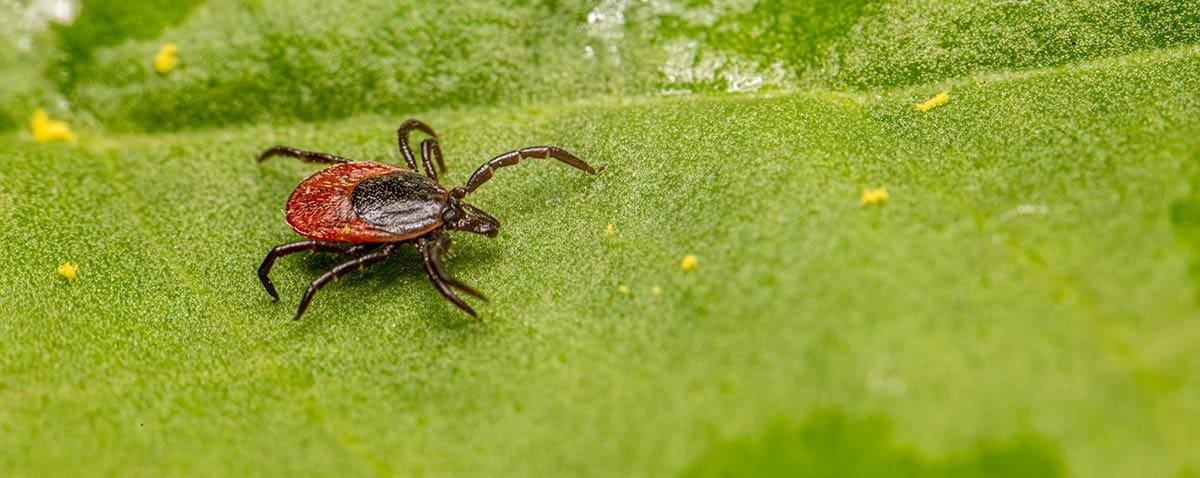
Experts have pointed to a few likely drivers behind the rough start to 2026. News coverage of the current spike has cited mild winter conditions, early warmth, and abundant host animals like deer and mice as possible contributors to heavier tick activity and more human exposure.
Long-term ecology research from Cary Institute also supports the broader link between acorn production, white-footed mouse populations, and later Lyme disease risk.
It is worth noting that no single factor explains every local outbreak. Weather, habitat, wildlife traffic, and human outdoor activity all play a role.
But the main takeaway is simple: when ticks get an earlier start, people and pets face a longer window of exposure.
What This Means for Coastal North Carolina
For homeowners on the Outer Banks and across Coastal North Carolina, tick exposure is not just a trail or deep-woods issue, there are several tick species capable of spreading disease here.
North Carolina’s Department of Health and Human Services’ 2024 tickborne disease annual report says there are several tick species in North Carolina that can transmit disease to humans, and it highlights illnesses including Lyme disease, ehrlichiosis, anaplasmosis, and spotted fever illnesses. NCDHHS also urged North Carolinians in May 2026 to “Fight the Bite” as temperatures rise.
For the Outer Banks specifically, there is another reason not to dismiss tick risk. Researchers detected Borrelia burgdorferi, the bacterium associated with Lyme disease, in questing ticks and rodents at five Outer Banks locations over an 18-year period.
That does not mean every tick carries Lyme disease, but it does reinforce that prevention here should be taken seriously to slow the relevance of tick-borne illnesses on the Outer Banks.
The CDC says many tick bites happen close to home, especially in grassy, brushy, or wooded areas around neighborhoods and yards. That means normal outdoor activities like playing outside, walking the dog, mowing, or spending time near lot edges can increase exposure risk.

Where Tick Problems Often Start Around the Home
Most people do not notice a tick problem until they find one on a pet, on clothing, or after spending time outside. But tick activity often begins in the parts of a property people overlook: brushy transitions, shady edges, fence lines, leaf litter, overgrown vegetation, and the areas where lawn meets natural cover. CDC guidance highlights grassy, brushy, and wooded areas as the places where tick exposure most often happens.
That is why early-season prevention matters. Once tick activity increases, it becomes easier for pets to bring ticks inside and for kids, guests, or homeowners to come into contact with them during ordinary yard use. If your property includes pet areas, outdoor seating, a wooded edge, or a lot of landscaping, now is the time to pay attention. This is an evidence-based local inference drawn from CDC exposure guidance and North Carolina tick surveillance trends.
What Homeowners Can Do Right Now to Reduce Risk
The best first step homeowners can take to prevent tick borne illnesses is to reduce exposure. CDC guidance recommends checking yourself, children, pets, and gear after spending time outdoors, especially around grassy or brushy areas.
North Carolina public health resources also emphasize awareness, prevention, and early action as tick activity rises, recommending regular tick checks after time outdoors, EPA-registered repellents, and permethrin-treated clothing.
Around the property, it also helps to:
- keep grass cut and edges maintained
- trim back overgrown vegetation
- reduce brush and leaf litter
- pay extra attention to pet areas and yard edges
- check pets after they come in from outside
Those steps can help, but they do not always solve the whole problem when tick pressure is already building. That is when professional tick control on the Outer Banks becomes more important.
When Professional Tick Control Makes Sense
A lot of homeowners wait until they are consistently finding ticks before they act. The challenge with that approach is that once ticks are already showing up on pets or people, the problem has usually been building for a while.
If you are already finding ticks on pets, clothing, or around outdoor living areas, it may be time for a more targeted approach. Professional tick control is most effective when it focuses on the areas where ticks actually hide, not just the middle of an open lawn.
That usually means the shaded, humid, brushy parts of the property where ticks wait for a host. CDC guidance on where people encounter ticks supports that kind of targeted strategy.
This is also why a local service plan matters. Coastal properties, vacation rentals, pet-friendly yards, and homes with a lot of vegetation all create different tick risks. A one-size-fits-all approach is rarely the best fit.
That is one reason an early inspection and treatment plan can be more effective than waiting until the problem gets worse later in the season. This is an inference based on CDC prevention guidance and North Carolina’s emphasis on personal protection and awareness as tick activity increases.
Many homeowners also think about tick issues alongside other warm-weather outdoor pests. If your yard is active in spring and summer, pairing tick service with mosquito control can make your outdoor spaces more comfortable overall.
That is especially useful on the Outer Banks, where families and guests spend so much time outside. This seasonal connection is an inference based on shared outdoor exposure patterns and service relevance.
The Bottom Line on the 2026 Tick Season
The early data points to a strong and possibly prolonged tick season in 2026. The CDC’s emergency-room trend data shows an unusually strong start, and North Carolina health officials are already reminding residents to take tick prevention seriously.
For Coastal NC homeowners, that means now is the time to get ahead of the problem, not wait until summer is in full swing.
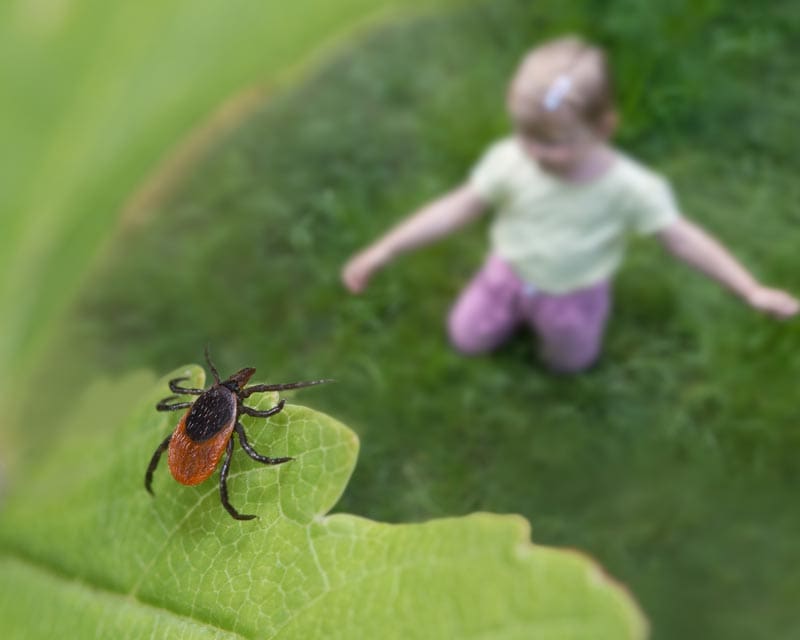
Still concerned about ticks around your yard, rental property, or pet areas?
If you are already seeing ticks on pets, noticing more activity around the yard, or simply want to protect your family sooner rather than later, contact Pro 1 Pest Control to schedule an inspection. You can also learn more about our broader home pest control services if you are looking for a more complete protection plan.