Opossums may not seem as destructive as some other nuisance wildlife at first glance, but once they start denning under a home, inside a crawlspace, in a garage, or around outdoor structures, they can create sanitation concerns, unpleasant odors, and repeat wildlife activity around your property.
On the Outer Banks and throughout Northeastern North Carolina, opossums are drawn to properties that offer quiet shelter, easy food access, and protection from the elements. Elevated homes, crawlspaces, garages, sheds, porches, pet food, and unsecured trash can all make your property more attractive to wildlife.
At Pro 1 Pest Control, we provide professional opossum removal and wildlife exclusion services designed to safely capture, remove, and help prevent opossums from returning.
If you think an opossum may be living under your home or around your property, contact us online, call us today at 252-261-3111, or email us at info@obxpest.com to schedule a professional wildlife inspection today.
Why Opossums Target Outer Banks & Northeastern North Carolina Properties
Opossums are nocturnal animals that are active mainly at night and often take shelter in covered, protected areas near food and water. They are highly adaptable scavengers and commonly feed on insects, carrion, garbage, compost, and pet food. Many opossums may den in attics and garages, make messy nests, and become a nuisance near homes by getting into garbage, bird feeders, and outdoor food sources.
Properties on the Outer Banks and across Northeastern North Carolina can attract opossums because they offer:
- Covered crawlspaces and elevated foundations
- Garages, sheds, and storage areas with quiet shelter
- Pet food, bird seed, trash, and outdoor cooking areas
- Reduced activity around seasonal or off-season vacation rentals
- Landscaping, brush, and other cover near the structure
Like other nuisance wildlife on the OBX, opossums take advantage of structural vulnerabilities and low-disturbance areas around homes and rentals.
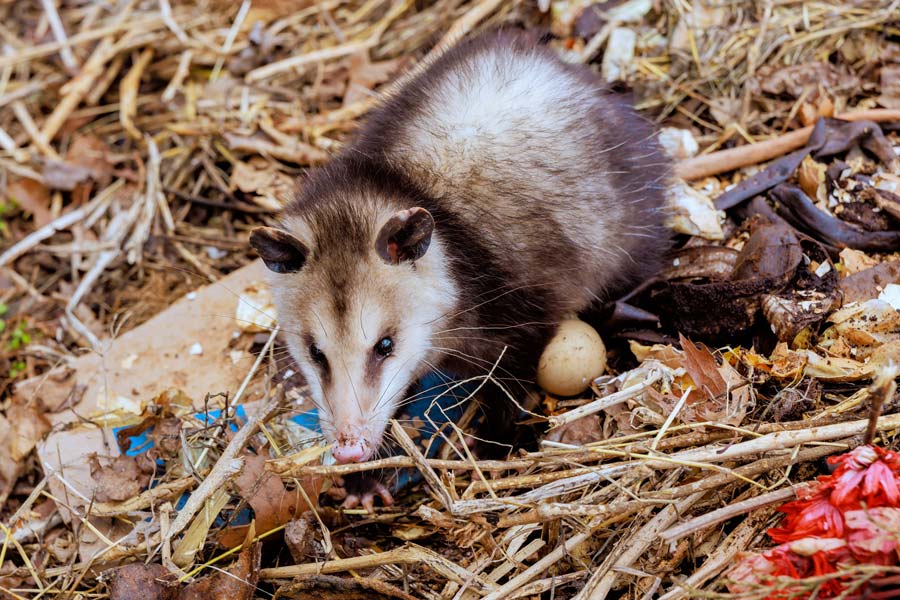
Common Signs of Opossum Activity Around Your Home
Opossums are usually quieter and less destructive than raccoons, but they still leave behind signs that something is not right.
Some common signs of opossum activity include:
- Noises under the home, in the crawlspace, or around the garage at night
- A musky or foul odor near a denning area
- Disturbed insulation or nesting debris in sheltered spaces
- Knocked-over trash, scattered pet food, or raided bird feeders
- Tracks or droppings around crawlspace doors, decks, or outdoor structures
- Repeated sightings near the same area after dark
If wildlife keeps returning to the same part of the property, there is usually a food source, harborage area, or access point that needs to be addressed.
Damage Squirrels Can Cause Inside Your Home
Many property owners underestimate how destructive squirrels can be once they enter a structure.
Because squirrels are rodents with constantly growing teeth, they chew continuously on wood, wiring, and structural materials. Once inside a home, they often build nests, damage insulation, and create entry points that allow other wildlife to follow.
Potential issues caused by squirrels include:
- Chewed Electrical Wiring: Damaged wires increase the risk of electrical shorts and potential fire hazards.
- Destroyed Insulation: Squirrels often shred insulation to create nesting areas, reducing energy efficiency.
- Roof and Vent Damage: Squirrels frequently enlarge small openings around soffits or attic vents.
- Contamination: Droppings, urine, and nesting debris can contaminate attic spaces and create unpleasant odors.
Over time, these issues can lead to expensive repairs if the animals remain inside the structure.
Are Opossums Dangerous?
Opossums are often misunderstood. North Carolina Wildlife Resources Commission notes that they provide ecological benefits and are highly resistant to contracting rabies, but that does not mean they belong inside or underneath a structure.
When opossums den on a property, they can create unsanitary conditions, attract other pests, and leave behind urine, droppings, and nesting mess in places that should stay dry and clean.
For property owners, the biggest concerns are usually:
- Contamination in crawlspaces, garages, or storage areas
- Odors around the home
- Repeated wildlife intrusion if access points stay open
- Fleas, ticks, or other pests associated with wildlife activity
- Damage around trash storage, outdoor feeding areas, or poultry spaces
Even when an animal is not aggressive, it can still become a nuisance that needs to be handled correctly.
DIY Opossum Removal Is Not Recommended
It can be tempting to assume an opossum will wander off on its own, but DIY wildlife removal often fails because it does not solve the reason the animal showed up in the first place.
Opossums are strong climbers, active at night, and may den in hard-to-reach areas. In warmer regions, breeding season can run from January through July, and opossums may raise more than one litter per year, which means a simple “remove the animal” approach may overlook dependent young or a recurring den site.
Without inspection and exclusion, the same property conditions that attracted one opossum can continue attracting more wildlife.
Our Opossum Removal & Exclusion Process
At Pro 1 Pest Control, we take a complete approach to opossum control. Our goal is not just to remove the animal, but to help correct the conditions that allowed wildlife activity in the first place. Below is an overview of removal and exclusion process.
#1: Thorough Wildlife Inspection
We begin with a detailed wildlife inspection of the property to determine:
- Where the opossum is sheltering
- How it is getting in or around the structure
- Whether there are signs of repeated wildlife activity
- Whether food or water sources are drawing animals in
- What exclusion work may be needed to help prevent re-entry
This step allows us to build a customized plan instead of relying on guesswork.
#2: Safe, Humane Removal
Our trained wildlife professionals use approved, regulation-conscious trapping and removal methods based on the situation at your home or property.
Every wildlife issue is different. Some opossums are simply passing through, while others have settled into a protected denning area. We work to remove the animal safely and responsibly while minimizing stress on the property owner and the animal.
#3: Entry Point Sealing & Exclusion
Removal alone is not enough.
After active wildlife is addressed, we help identify and secure vulnerable areas that may invite future intrusion, such as:
- Crawlspace access points
- Gaps around skirting or foundation areas
- Openings around sheds, garages, and porches
- Areas where food, debris, or cover are encouraging wildlife activity
Our exclusion recommendations are designed with Outer Banks properties in mind, including elevated construction and seasonal occupancy patterns.
#4: Cleanup & Next-Step Recommendations
If wildlife activity has left behind contamination, odor, or damaged material, we can recommend the next steps needed to restore the space and reduce the chance of recurring issues.
A clean, sealed, less-inviting environment is one of the best long-term defenses against nuisance wildlife.
When Is Opossum Activity Highest?
Opossums can be active year-round in coastal North Carolina, especially in areas where food and shelter stay available. Wildlife control references note they are usually active at night, and breeding season in warmer parts of their range can extend from January through July.
Because they may raise more than one litter, sheltered structures can become especially attractive during late winter, spring, and early summer.
On the Outer Banks, activity often becomes more noticeable when:
- Outdoor food sources increase
- Vacation homes sit empty for stretches of time
- Wildlife looks for dry shelter during wet or changing weather
- Crawlspaces, decks, and garages offer safe cover close to food
Proactive inspections and exclusion work can help reduce the chance of a small wildlife issue turning into a bigger one.
Why Choose Pro 1 Pest Control for Opossum Removal?
Wildlife removal on the Outer Banks requires more than setting a trap. It takes local knowledge, structural awareness, and an understanding of how coastal properties create hidden access points for animals.
At Pro 1 Pest Control, we combine opossum and wildlife removal experience with long-term prevention strategies designed for homes, vacation rentals, and commercial properties across the Outer Banks and Northeastern North Carolina. Your current wildlife service pages already position the company around humane removal, exclusion, and local structural knowledge, which is exactly the right frame for this page too.
Our team provides:
- Experienced local wildlife removal professionals
- Humane trapping and removal strategies
- Inspection-based exclusion recommendations
- Knowledge of elevated homes and crawlspace vulnerabilities
- Clear communication for homeowners and property managers
While we can help you get wildlife out, our main focus is to keep it out.
Schedule Opossum Removal on the Outer Banks
If you have heard noises under your home, noticed signs of wildlife around your crawlspace or garage, or keep seeing opossums around your property, Pro 1 Pest Control is here to help.
We provide professional wildlife inspection, humane removal, and exclusion services for homes, vacation rentals, and commercial properties across the Outer Banks and Northeastern North Carolina.
Call 252-261-3111 or request your free initial inspection today.